


Royston Cave: The UK’s most mysterious attraction?
If you love history, intrigue, and experiences that you cannot wait to tell people about, Royston Cave is a must-visit. I went in with a vague idea of what to expect, but nothing prepared me for the atmosphere, the detail, and the sheer sense of wonder that I was about to experience. If you’re looking for your next day trip, things to do with friends, family days out, or a solo adventure, Royston Cave needs to be top of your list.
Before the tour: setting the scene
The cave entrance is in an unassuming setting, hidden between shops and cafés. We met with our tour guide, Emma, who set the scene with local history and context before the real adventure began. Historically, Royston sat at the junction of two ancient byways that had shaped movement across England for centuries: the Icknield Way and the Roman-built Ermine Street, which connected London with York.
During the Stuart period, James I of England took a shine to this area, establishing a palace and spending a lot of time here, with Royston even claiming one of the earliest recorded games of golf in England. All of that gives you a sense that this unassuming Hertfordshire town has long been more significant than it might first appear, which makes what lies beneath it feel even more exciting.
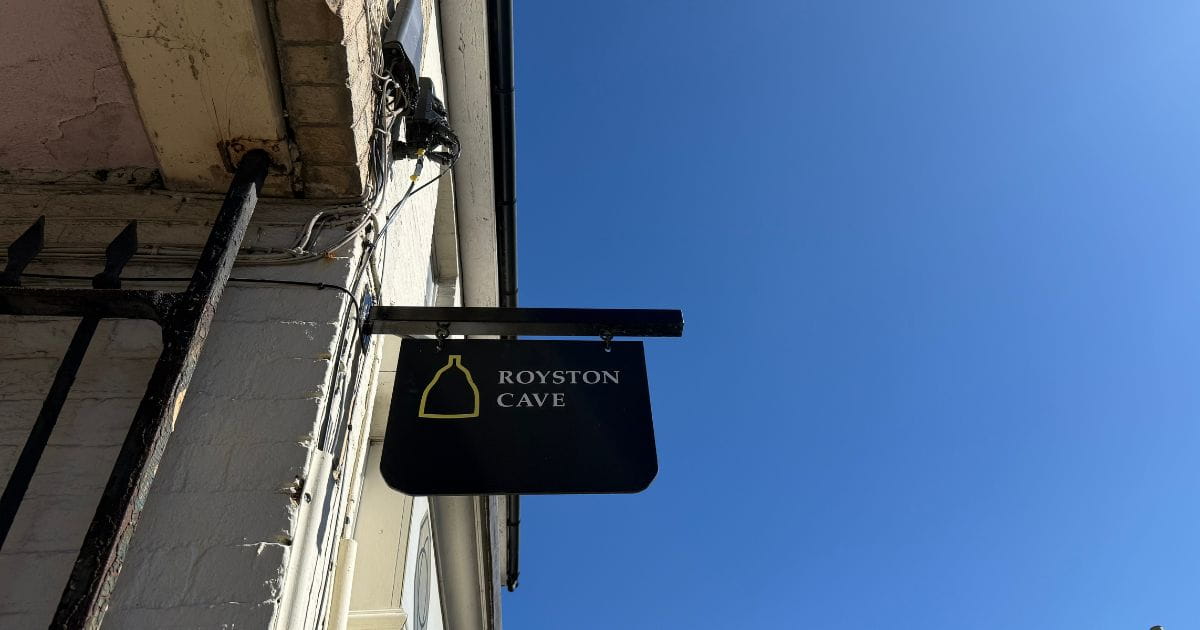
The build-up: curiosity, context, and a hint of excitement
The tour begins above ground with a well-paced introduction that doesn’t rush you straight into the main event, but instead builds anticipation with curiosity and mystery. Emma talked us through the discovery of the cave in 1742, I won’t give away the whole story (where would be the fun in that) but it really adds to the atmosphere of the visit.
There’s a short health and safety briefing, then the next thing you know, you’re ducking your head and descending into the cave. That shift from daylight and lorries thundering past, into a sacred space that has puzzled historians for centuries, is where the anticipation really starts to build.
Stepping inside: calm, quiet, and completely mind-blowing
The first thing I noticed when we entered the cave was the drop in temperature. We visited on a warm, sunny day, but the cave is cool (even a bit chilly). The noise of the outside world disappears and you’re left standing face-to-face with the most incredible cave etchings. Rather than feeling enclosed or claustrophobic, the space feels calm and surprisingly comfortable, so even if you’re not a fan of tight underground spaces like me, you can still enjoy this experience.
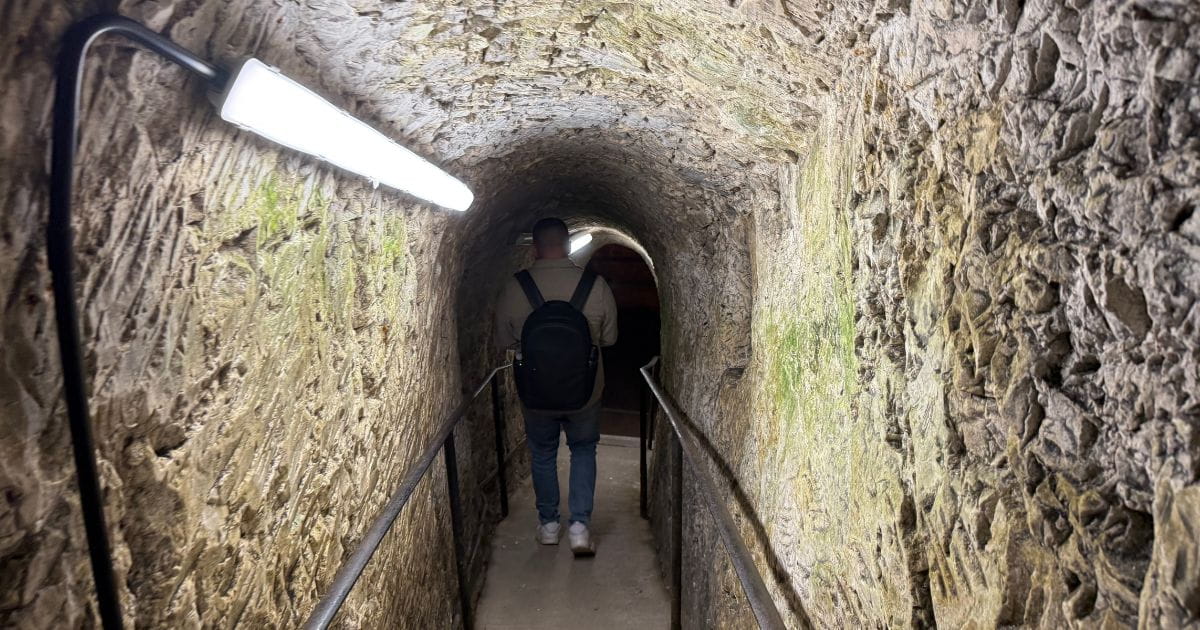
The carvings: exceeding all expectations
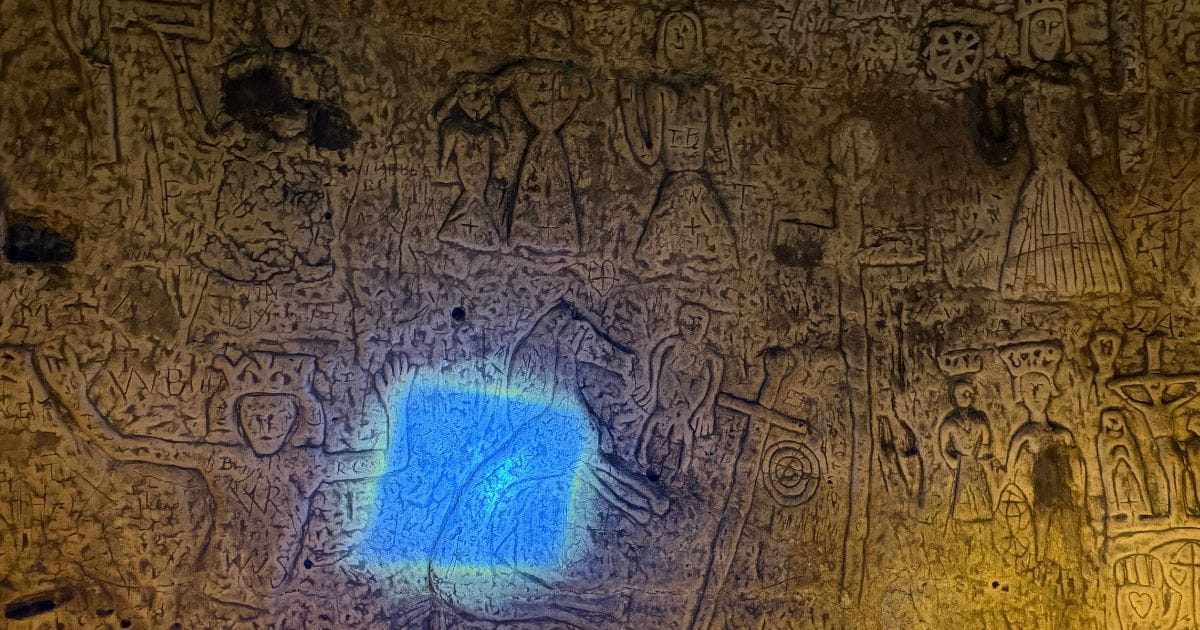
Nothing quite prepares you for the carvings inside Royston Cave. You might expect a handful of markings, maybe a few interesting figures, but what you actually get is a dense collection of imagery that completely covers the walls. It takes a moment to really soak it all in, before the tour guide carefully explains what all the carvings are thought to be.
No one knows who made the cave or why, and the time period is a mystery too. Historians have spent centuries analysing the carvings to try and figure out when they were made and what they symbolise.
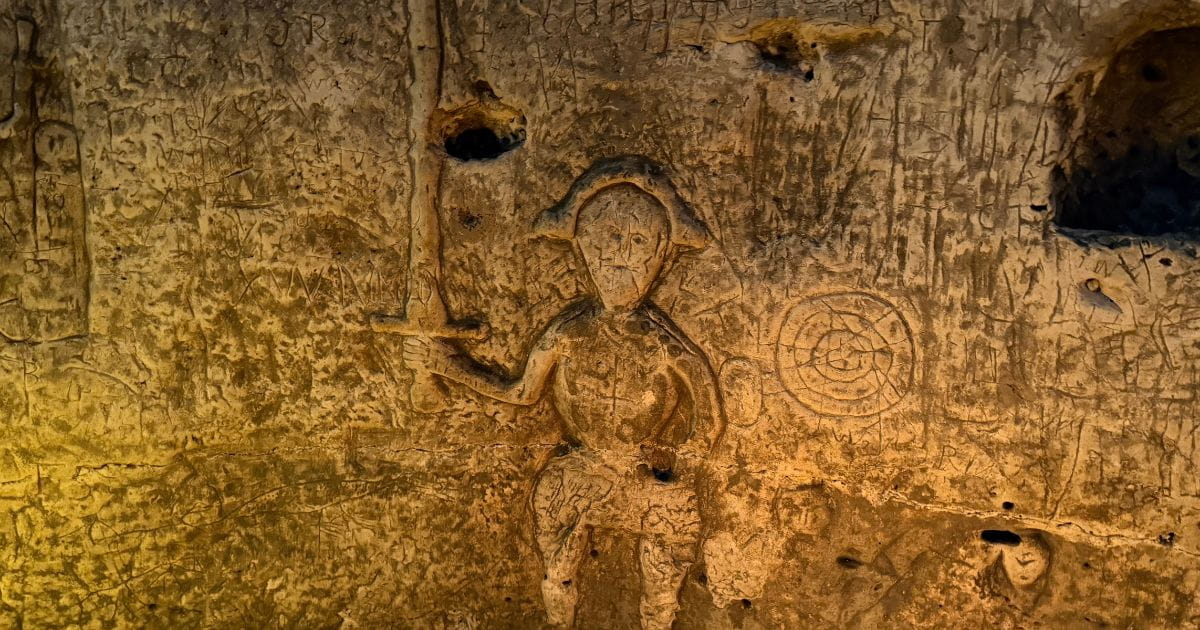
Some of the carvings are believed to date back more than 700 years, and standing in front of them it’s almost unbelievable to think that you’re standing this close to such significant history. It’s not behind glass, it’s not reconstructed, and it hasn’t been polished into something more presentable. You’re looking directly at the work as it has survived, complete with imperfections and unanswered questions.
What makes Royston Cave even more engaging is the way the guide brings everything together. Rather than simply pointing things out, Emma talked us through the details that historians use to interpret the cave, explaining how elements like the shape of hearts, which didn’t appear before the 1300s, or the positioning of Christ’s feet on the crucifix, can help narrow down possible dates and influences.
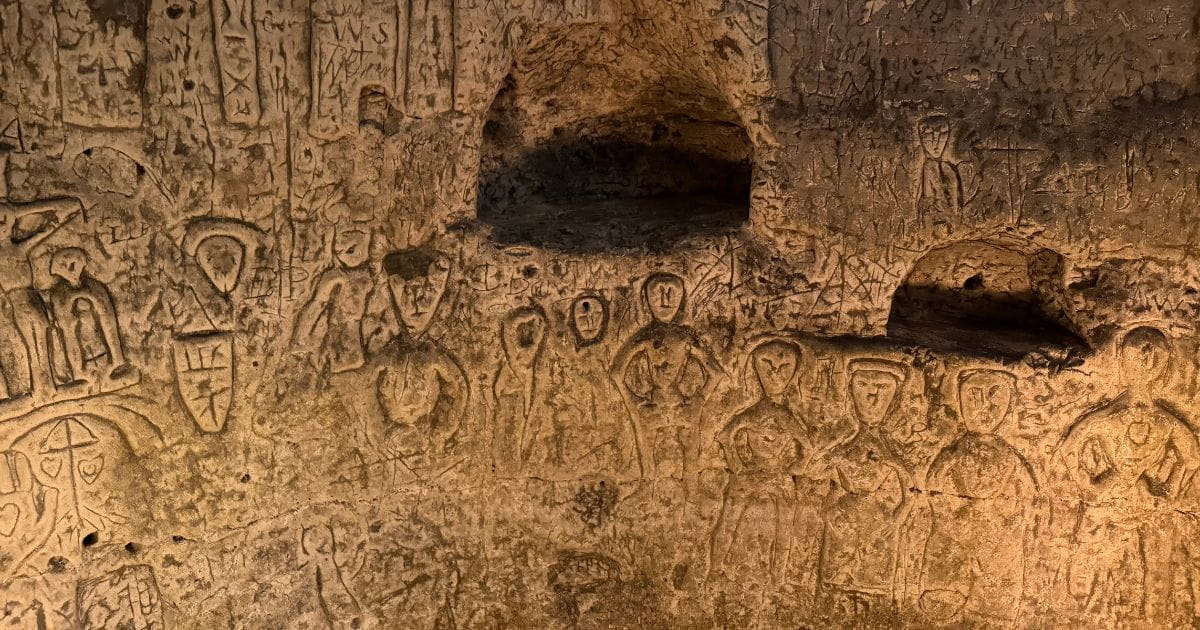
Theories, symbolism, and unanswered questions
As you move around the space, the range of imagery opens the door to a series of theories that are just as compelling as the carvings themselves. There are clear religious elements, but also symbols that have been linked to groups such as the Knights Templar and the Freemasons, each bringing their own layer of interpretation.
Then there are the more interesting theories, the ones that lean into mystery and conspiracy, some referencing themes popularised by The Da Vinci Code, which the guide introduces in a way that keeps things informative without losing sight of the historical evidence. No single explanation has ever been confirmed, and rather than being frustrating, that uncertainty adds to the experience, giving you space to form your own ideas as you take it all in. I scanned the carvings, wondering if I might spot something that no one else ever has. It’s exciting, enigmatic, and completely absorbing.
A second layer of history in plain sight
Just when you think you’ve taken in the full depth of the cave’s carvings, another detail emerges that adds yet another layer. Across a lot of the cave, you notice markings that are clearly different from the original carvings, and Emma explained that this is Victorian graffiti left behind after the cave was rediscovered.
Instead of detracting from the site, these additions become part of the story. Early illustrations made at the time of discovery allow historians to distinguish between the original work and later contributions, so what you’re seeing is effectively a timeline carved into the walls, with each generation leaving its trace in a way that still feels tangible today.
A hidden site with major significance
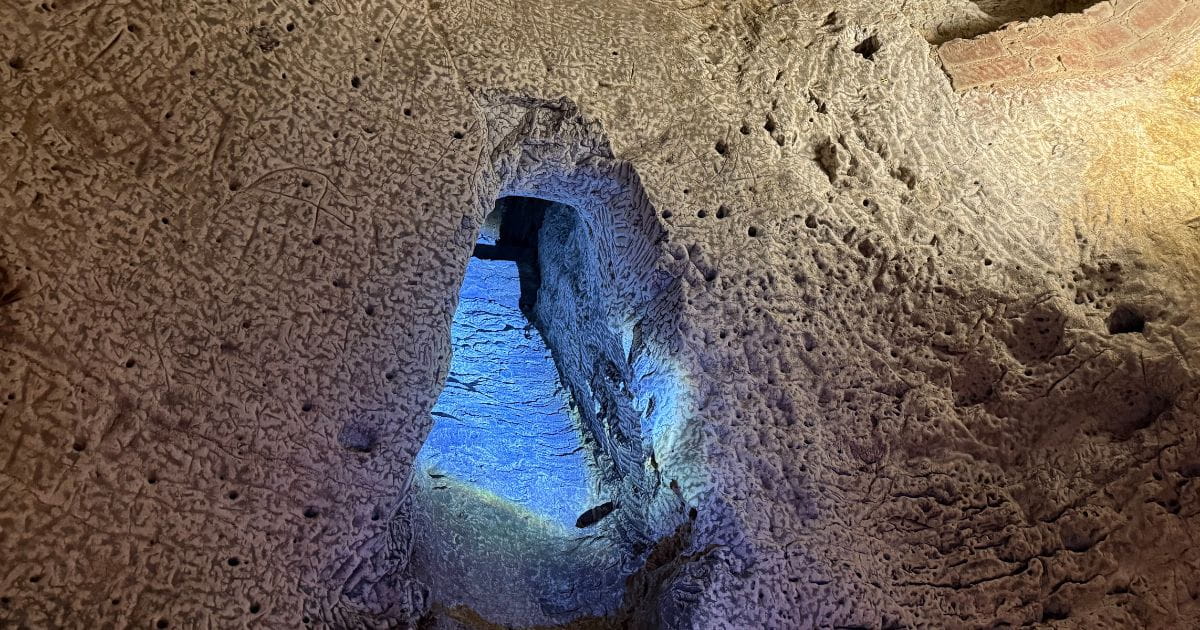
Spending time inside Royston Cave makes it clear that this isn’t a minor curiosity tucked away in a quiet town. In terms of cultural and historical significance, it’s comparable to sites like Glastonbury Tor and Avebury Stone Circle, yet it hasn’t reached the same level of recognition or fame.
That contrast works in your favour as a visitor, because it means you can experience something genuinely significant without the crowds of tourists or the sense of being rushed through.
More than a tour: a space with atmosphere
While standard tours run between April and September, the cave continues to be used in ways that build on its naturally calm and reflective atmosphere. Events such as meditation sessions, sound baths, and seasonal gatherings, including those around St Katherine’s Day, give you the chance to experience Royston Cave in various different ways.
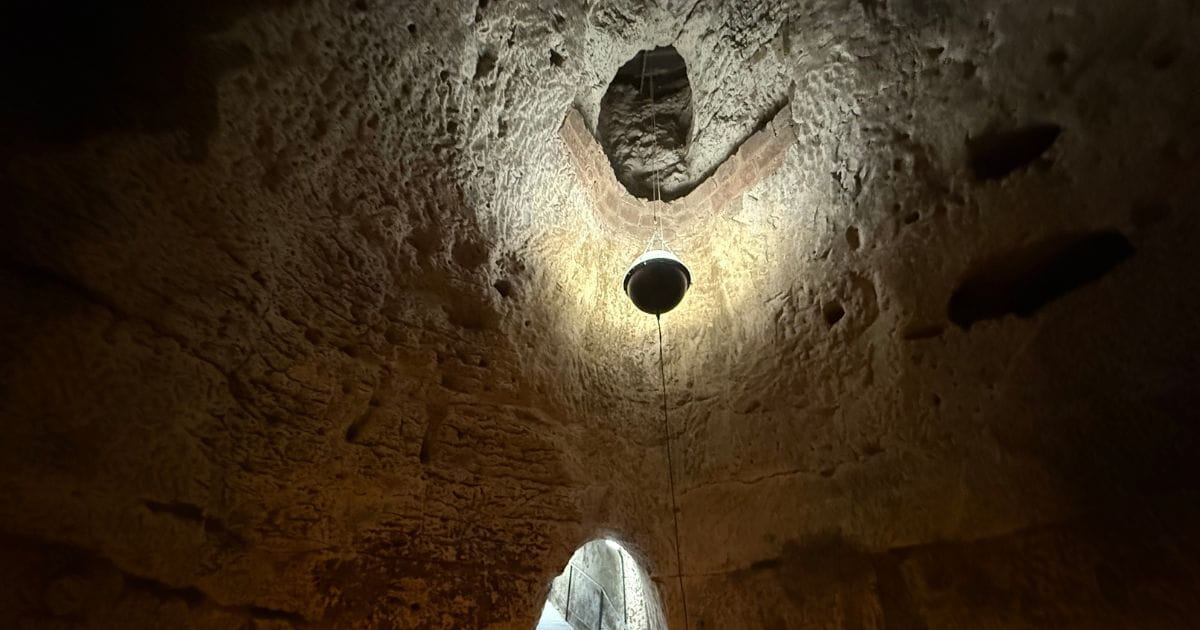
Even without those additions, there’s a noticeable energy to the cave that stays with you, a combination of stillness, history, and the unknown that’s hard to replicate elsewhere. Emma explained that it’s believed the cave stands on a cross-section of ley lines, thought to be invisible conduits of spiritual energy.
Make a day of it: More to explore in Royston
As we emerged from the cave after our tour, I felt completely awe-struck. It takes a while to sink in that you’ve just been immersed in centuries of significant history, layered in mystery and enigma.
Once you’ve finished your tour of the cave, you won’t want to go straight home. Royston is compact and walkable, and it’s well worth having a debrief with your group over coffee. The town has a great selection of independent shops, and there’s a genuine friendliness to the place that makes it easy to slow down and enjoy it properly. Have some lunch at Kooky Nohmad, browse Royston’s independent bookshop, or pick up some sweet treats from Kelly's Kitchen. There’s plenty to explore and discover.
Several businesses within Royston even offer discounts if you’ve taken the cave tour, which adds an extra touch and makes the whole visit feel connected.

Why Royston Cave is a must-visit attraction
What stayed with me most after visiting Royston Cave wasn’t just the carvings or the history, but the combination of both, plus a sense of mystery that hasn’t been resolved. It’s rare to find a place where so much is known, yet so much is still open to interpretation, and that balance is exactly what makes it so compelling.
If you’re drawn to history, curious about symbolism, or simply looking for a day out that offers something genuinely different, Royston Cave is the perfect choice. I already can’t wait to tell everyone I know about my visit, and look forward to returning for future day trips to this friendly hidden gem of a town.

Plan your visit to Royston Cave
How to get there: Take a Thameslink train to Royston. It only takes 20 minutes from Cambridge, or less than an hour direct from London King’s Cross. The cave and town centre are an easy 10 minute walk from the station.
Address: Katherine's Yard, Melbourn Street, Royston, SG8 7BZ
Phone: 01763 245484
Bookings: Online booking only, visit Royston Cave’s official website.
Hours: Public Tour Season will run between 4th April and 27th Sept 2026. Tour times are 1.00pm, 1.45pm, 2.35pm and 3.20pm. Tickets must be purchased in advance.
Prices: £10 Adults, £4 Child, £8 Concession, Under 3 years free
