

Supporting young people’s mental health around the railway
Mental Health Awareness Week allows us to shine a light on the emotional struggles young people face; but too often, those struggles remain hidden in plain sight. At Railway Children, we see first-hand how mental health challenges can shape a young person’s decisions, behaviour and even where they choose to spend their time. And increasingly, we see how the railway environment can become a backdrop to that story.
When emotional pain looks like “bad behaviour”
Mental health challenges among young people are far more common than many adults realise. But they don’t always show up in ways we expect. Instead of clear expressions of sadness or anxiety, distress can surface through behaviours that are easily misunderstood.
A young person struggling internally might appear:
- Withdrawn
- Irritable
- Avoidant of school
- Prone to risk-taking
- Disconnected or defensive
- Show evidence of self-harm
From the outside, these behaviours may look like disobedience, laziness or rebellion. But for a child dealing with anxiety, depression, trauma or overwhelming emotional pressure, they may simply be coping the only way they know how.
When that distress is mislabelled as “bad behaviour,” young people can feel ashamed, punished or ignored. Instead of receiving support, they may retreat further into silence - reinforcing a negative cycle that becomes harder to break.
Why some young people gravitate towards train stations
For some young people, transport hubs such as train stations become places they return to when life feels too heavy.
Stations can feel like:
- An escape from tense or unsafe environments
- A place of anonymity, where no one knows them or expects anything from them
- A symbol of freedom, movement or possibility
- A place to breathe, away from conflict, pressure or emotional overwhelm
- A place of belonging
These spaces may offer temporary comfort, but they also carry risks – especially for young people who are vulnerable, alone or emotionally distressed. At Railway Children, we work alongside rail staff and the wider rail community to identify and support those who may be struggling before harm occurs.
Understanding before judgement
What young people need most isn’t punishment or criticism – it’s compassionate curiosity and understanding.
Instead of asking, “What’s wrong with you?” we can begin by asking “What’s happened?” or “What do you need right now?”
When adults respond with empathy and patience, young people are far more likely to open up. Early intervention is key. If we can understand what young people need at an early stage, it can prevent emotional struggles from turning into crises. It can also help young people feel seen, valued and safe enough to accept help.
The power of being a trusted adult
Everybody – parent, teacher, rail worker, neighbour – can make a positive impact on someone’s life.
Within Mental Health First Aid training, Railway Children use the CARE acronym to offer advise about how to support a young person showing signs of mental health struggles:
- C: check there is no risk of immediate harm and take appropriate action if so.
- A: apply non-judgemental comm skills be an active listener.
- R: reassure them through encouragement and being thankful they have reached out.
- E: encourage them to access support. Young people often don’t need perfect answers, just a safe person who cares enough to listen.
We hope this provides opportunity to support a young person with mental health issues and how to effectively talk to them about their mental health.
A call for compassion on the rail network during Mental Health Awareness Week
This week, and every week, Railway Children is asking adults across the UK to look beyond the behaviour and see the child behind the struggle. By raising awareness of how mental health affects young people – and how the railway can sometimes become part of their coping journey – we can help ensure they receive the understanding and support they deserve. By noticing them, you could help them find safety and someone who can listen, helping children to rebuild their lives.
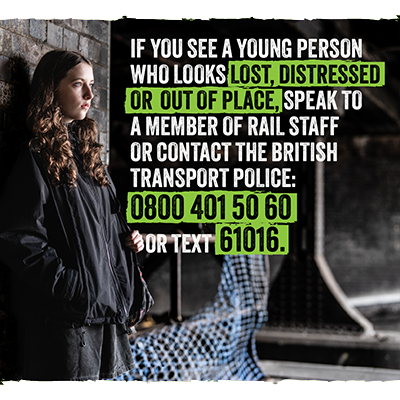
If you see a young person who seems withdrawn, upset or unsure where to go, please speak to a member of rail staff. Or alert the British Transport Police (BTP) by calling 0800 401 50 60 or by texting 61016. Vulnerable young people identified by BTP are then referred to Railway Children, enabling us to provide the support and help they need.
During Mental Health Awareness Week, we are also working with GTR to raise awareness of these issues among their rail community in the south. You may also spot our campaign targeted directly at young people, developed in collaboration with Railway Children’s youth participation group ‘Youth Platform’ on posters on-board trains and in stations.
Together, we can create a world where young people feel safe, seen, heard and never have to navigate their challenges alone.
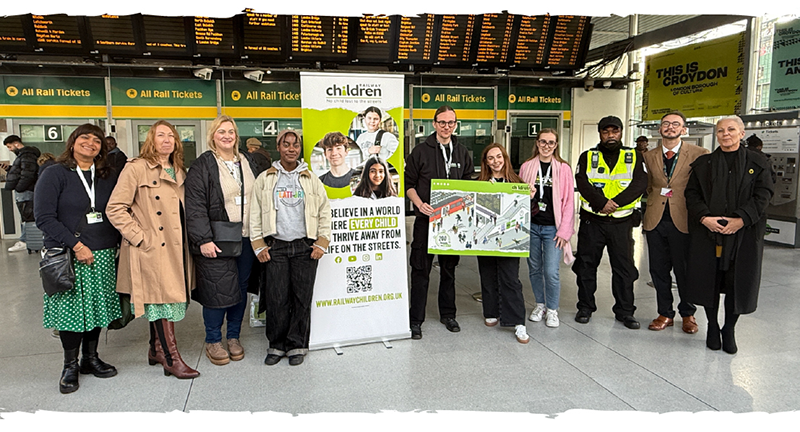
GTR CEO Angie Doll meets with Railway Children's Youth Ambassadors at East Croydon Railway Station in October 2025.