

With more than 8,000 plant species spread across 40 acres, Cambridge University Botanic Garden can feel like a living, breathing maze. I may not know my Latin names – or when you’re actually supposed to plant anything – but I do know you don’t need to be an expert to enjoy a day here.
Whether you’re a seasoned gardener or just someone who enjoys plants, trees, and the wild world of fauna, Cambridge University Botanic Garden is well worth exploring. Here's my ultimate visitor guide, with insider tips from my visit.
I set out one sunny autumn afternoon to soak up the changing of the seasons. I wanted to see the rare plants, find the most photogenic corners and stand to admire the huge trees in awe. And yes, I also had my eye on a slice of cake from the café – because doesn’t that just make a day out complete?
How to get to Cambridge Botanic Garden
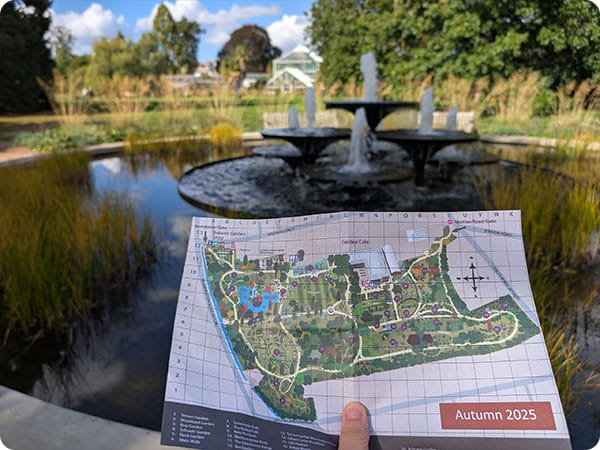
Getting to Cambridge University Botanic Garden couldn’t be simpler. The Gardens’ Station Road Gate is only an 8-minute walk from Cambridge railway station, which has straightforward Thameslink connections from lots of places including London, Stevenage and even as far south as Brighton. It was easy to book my tickets on the Thameslink app to go from Portsmouth to Three Bridges before switching to a Thameslink service to Cambridge. I arrived into the blue skies of Cambridge, and was off on my botanical adventure in minutes.
What to expect at Cambridge University Botanic Garden
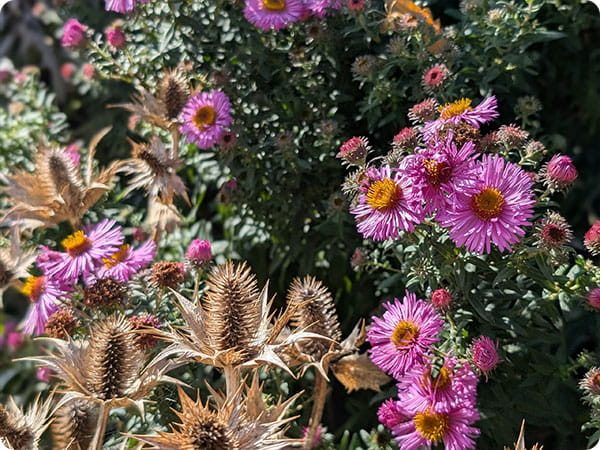
Enter through the Station Road Gate and your first stop will be the Autumn Garden. The sun bounced off the tapestry of colourful beds featuring Sweetgums and Smokebush, and the incredible leaves of the Japanese Osakazuki. The reds, oranges and yellows were the perfect welcome to the garden at this time of year. I felt my body relax with every step into the garden.
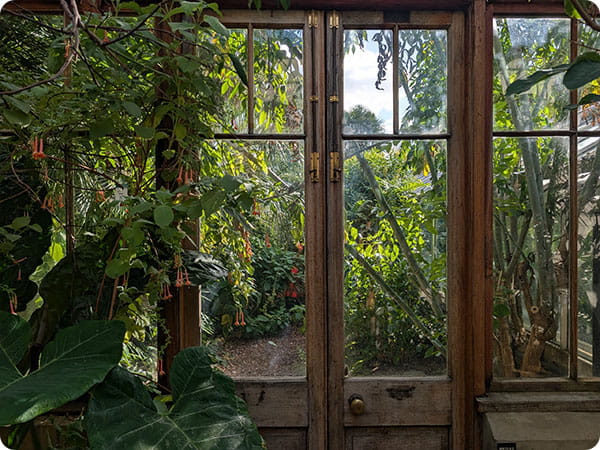
I was ready to explore. Just a few steps from the café I found the John Stevens Henlow exhibition, housed in a small shed tucked under the trees. Henlow was the Professor of Botany at Cambridge from 1825-1861, and was responsible for moving the Garden to its current site. During his tenure he transformed the study of botany at the university, shifting the focus from plants as medicine to plants in their own right. He also oversaw the garden’s layout, leaving a legacy that shaped both the space and the discipline.
Henlow famously encouraged his protégé Charles Darwin to take the voyage on the Beagle, helping set him on the path to the legacy he would later become. If he’d taken the spot himself, maybe he could’ve been the household name…
The Fountain
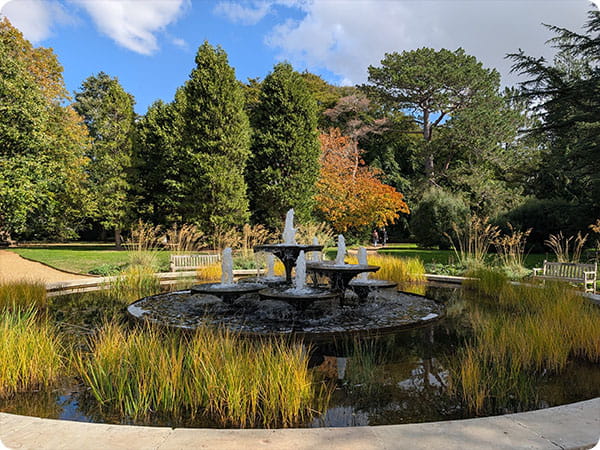
Just ahead, the fountain came into view, its seven bronze water lily leaves glinting in the autumn light. The water shimmered as the sun broke through, framed by the fiery colours of the surrounding trees. Nearby, three magpies hopped and fussed about, scavenging for crumbs and giving me a welcome reason to stay and watch.
One of the many great things about the Gardens are the countless benches dotted about, some with heartfelt dedications to individuals who’ve helped make the space what it is today.
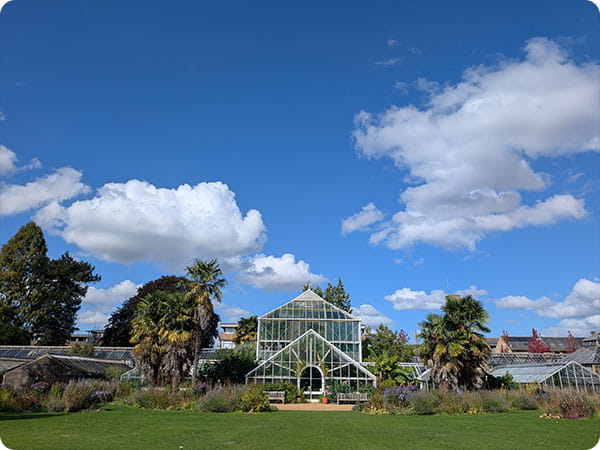
From my seat I spotted the Glasshouse Range over the main lawn and remembered the receptionist’s tip about it being the perfect place to warm up. I made a beeline across the grass, pausing only to admire the splash of colour in the perennials of the Bee Borders, before stepping inside.
Inside the glasshouses
Inside the glasshouses, I almost felt like a Victorian botanist on an expedition. Plant enthusiasts will spot treasures like the furry Mexican Feather Cactus, the striking Gladiolus carmineus, and the elegant African Aristolochia triactina. But even if you couldn’t identify one species from another, it’s still a joy to wander through and take in the sheer variety.
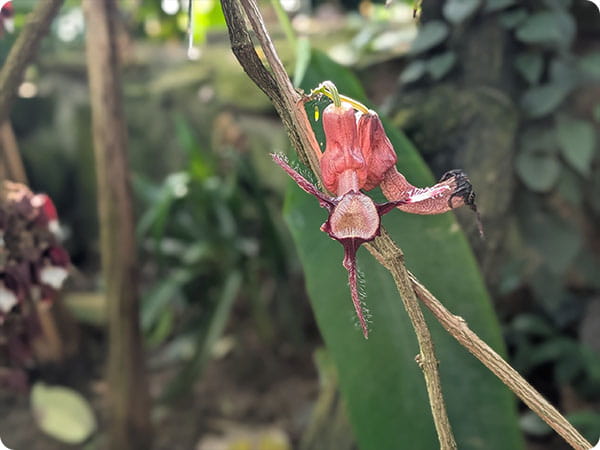
The collection is so carefully curated that simply moving from room to room felt like a journey across continents – palm trees, cactuses and hanging baskets fit into every crevice.
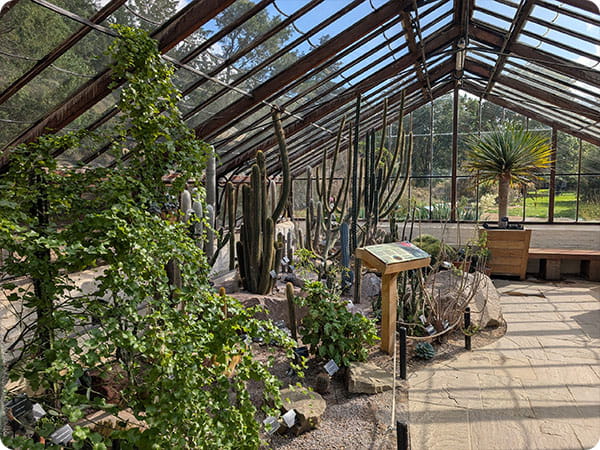
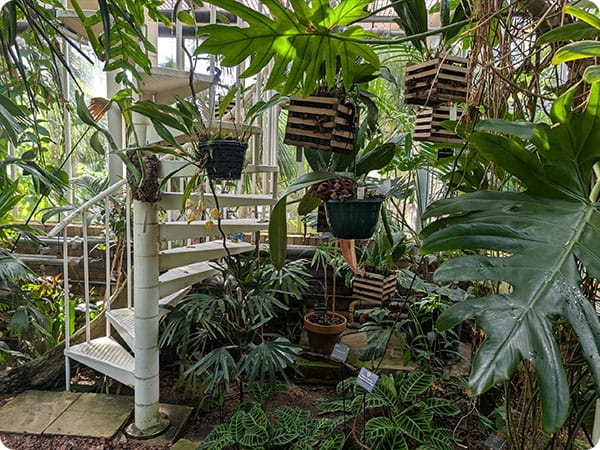
I wasn’t the only one enjoying the Glasshouses. Nearby, two young boys were proudly testing each other on plant names, while a few older couples strolled slowly through the displays. One man was bent over an impressive camera rig, capturing close-ups of the blooms, and a handful of mums with prams were simply soaking up a wholesome afternoon out.
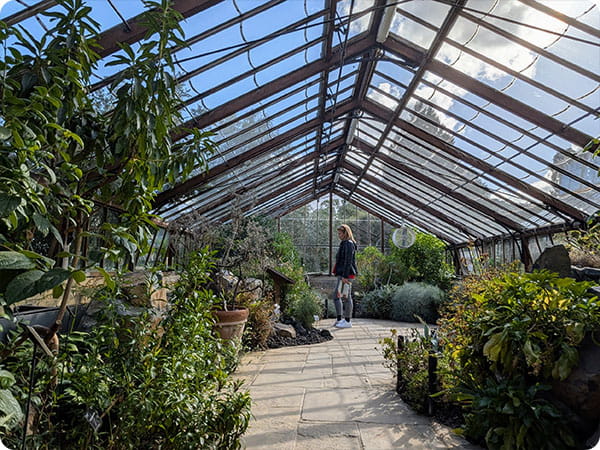
Wandering around the lake
As someone who lives by the seaside I’m happiest by the water, and at the Cambridge University Botanic Garden I was no different. I’d wandered past the Stream Garden, by the Woodland Garden and along the banks of the lake to find the perfect spot to rest on a bench overlooking the water.
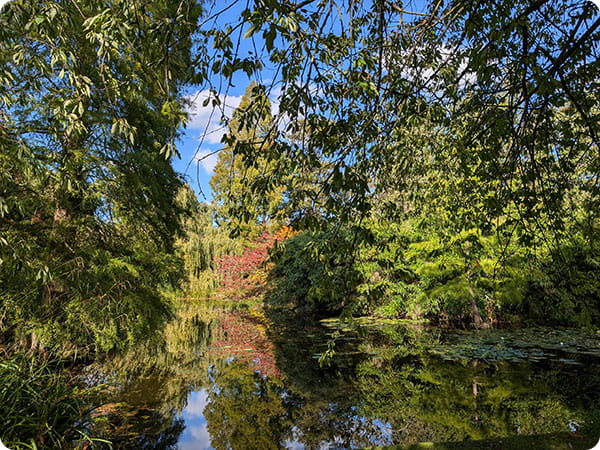
The lake looked beautiful with waterlilies floating among the brown and yellow leaves. A weeping willow caught my eye, making the scene even more striking. As I walked on, the reflections grew clearer, and the sound of ducks quacking nearby brought the place to life. With the Rock Garden as a backdrop, there was so much to take in I had to join the other couples in resting on yet another bench.
The evolutionary Systematic Beds
The next stop was the Systematic Beds – 120 individual beds to showcase the plant kingdom in evolutionary order. They feature 78 flowering families and many Latin names, if you want to take your botany study a level deeper.
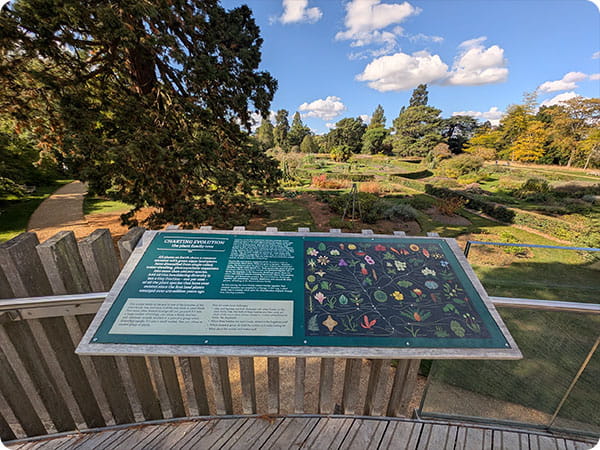
It’s more than just a pretty sight to walk through though: it’s a living library used by Cambridge students and researchers since 1846 to study plant relationships and genetics. The beds are all part of the Garden’s mission to combine science with public enjoyment.
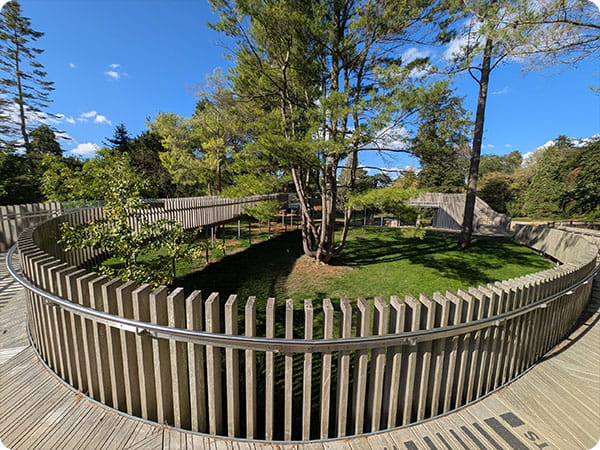
Make sure to pause at the top of the Rising Path to appreciate the layout, and take in as much of the information boards as you can.
More garden highlights
The Rose Garden at the Cambridge University Botanic Garden has played an important part in our understanding of rose flowers throughout time. In fact, the genealogy was explored by geneticist Charles Chamberlain Hurst from 1922-1947 right here. Today you can wander around the beds, with their unique tripod supports rising out of the ground.
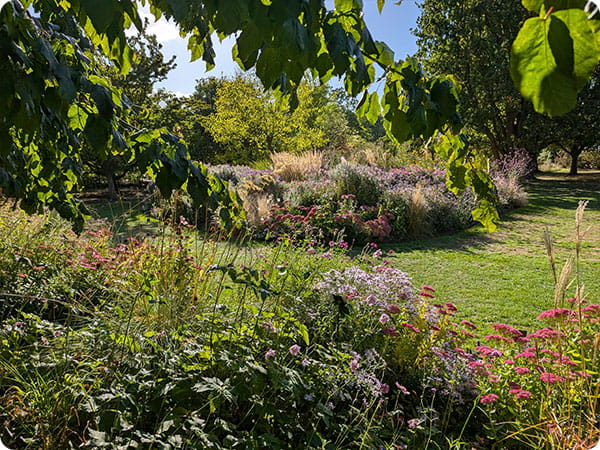
The nearby Scented Garden offers another picture-perfect perspective, the scent of lavender filled the air. There’s a great cabin to sit in, which would be lovely in the rain – although it was even better in the sun!
Seek out the rarest plants and oldest stories
Keep an eye out for the Dawn Redwood on the south-western edge of the Lake – once thought extinct until it was rediscovered in China in the 1940s. It’s the first Dawn Redwood to grow in Great Britain since the Mesozoic era, when dinosaurs dominated the fauna.
You’ll also find Wollemi Pines, an ancient species known as ‘living fossils’, which date back to the time of the dinosaurs too. Both are a reminder that this garden isn’t just ornamental – it’s a hub for groundbreaking research. Many of the plants are used in studies on genetics, climate change, and conservation. Cambridge scientists have even used specimens here to better understand crop resilience and global biodiversity.
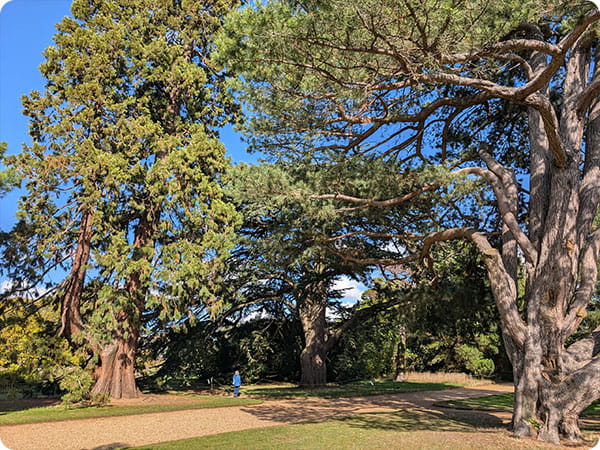
There’s also interesting folklore around some of the species too. The Rowan Tree, found near the Woodland Garden, was historically planted to ward off witches. Little details like these add a layer of magic to your visit, especially if you’re visiting with children.
Is there a café at Cambridge Botanical Gardens?

I wandered over to the Garden Café, eager for a cup of tea and a bite to eat. The menu had plenty to tempt me – from hearty sandwiches to fresh wraps – but I decided to branch out from my usual pick. A veggie frittata with a crisp broccoli salad felt like the perfect choice for a “fruit of the earth” kind of day, keeping the garden theme going right through lunch.
The café had all the essentials covered – steaming hot drinks, a few tempting tipples, generous slabs of cake, and fresh salads for balance. I couldn’t resist ordering a slice of the moist lemon and lime drizzle cake before I left. It was clearly the popular choice judging by my fellow clientele – I soon learned why.
Plan your visit to Cambridge University Botanic Garden
Address: 1 Brookside, Cambridge CB2 1JE
Phone: 01223 336265
Hours: Open daily from 10am-6pm
Website: www.botanic.cam.ac.uk
When to visit Cambridge Botanic Garden
When I went on a September Monday, the gardens felt calm and uncrowded. The golden colours of autumn made this visit especially beautiful, and I can only imagine how magical the landscapes must look under a winter frost. There’s always something quirky and interesting going on, with events running throughout the year – it’s worth keeping an eye on the listings.
Cambridge Botanic Garden isn’t just a place to wander – it’s a living, breathing encyclopedia of the plant world. Whether you’re there for science, serenity, or the perfect Instagram shot, take your time to explore the secret corners, stop to read the plant labels, and enjoy the magic of the Garden.
About the author: Victoria Philpott has been a travel and festival blogger at VickyFlipFlopTravels since 2012. She’s travelled to over 70 countries, exploring the jungles of Papua New Guinea, sailing in the Philippines and cycling the length of Vietnam. Nowadays you’ll find her exploring Europe with her young son, and making the most of the beautiful UK.
